In this article
1950s and Early 1960s: Italian Race Cars for the RoadThe 1960s Golden Age of Italian Sports CarsThe 1970s: Wedges, Rally Legends and Italian-American MuscleThe 1980s to 2000s: Group B and the Italian Supercar EraWhat Makes an Italian Car "Iconic"?Buying a Classic Italian Car: Three Quick TipsFind Italian Sports Cars for Sale on RareCars.comFAQNo country has given the car world more icons per square mile than Italy. A small stretch of Emilia-Romagna and Piedmont produced Ferrari, Lamborghini, Maserati, Lancia, Alfa Romeo, De Tomaso and the coachbuilders who shaped them. These are cars that won the world's great races, defined the word "supercar" and ended up on bedroom walls for generations.
Below are 20 iconic Italian cars every collector should know, in roughly chronological order, with why each one matters and how many were built. Some are among the rarest cars ever made. One was built in the millions. All of them changed what people expect from a car.
Looking strictly for the rarest? See our companion list of the 15 rarest Italian cars.
1950s and Early 1960s: Italian Race Cars for the Road
1. Lancia Aurelia B24 Spider America (1955)
Built: 240 (59 right-hand drive B24 and 181 left-hand drive B24S)
Why it matters: a Pinin Farina-bodied V6 roadster with a wraparound windshield, built largely for the American market. It is one of the most elegant Italian sports cars of the decade, and Lancia's pioneering V6 makes it as important technically as it is beautiful.
2. Fiat 500 (1957)
Built: about 3.9 million (3,893,294 from 1957 to 1975)
Why it matters: the least rare car on this list and one of the most iconic. The Nuova 500 put post-war Italy on wheels and became a symbol of Italian design worldwide. Proof that "iconic" and "rare" are not the same thing, and that a great design can be both cheap and timeless.
3. Ferrari 250 GTO (1962)
Built: 36
Why it matters: the holy grail of Italian race cars. Built for GT racing and road legal, the 250 GTO won on track and has become the benchmark for the entire collector-car market. In November 2023, a 1962 Ferrari 330 LM / 250 GTO sold at auction for $51.705 million, the most ever paid for a Ferrari at public auction.
4. Alfa Romeo Giulia TZ (1963)
Built: 112 TZ (commonly cited; Alfa Romeo's own heritage figures range from 117 to 121), plus 12 TZ2
Why it matters: "TZ" means Tubolare Zagato: a tubular spaceframe clothed in a feather-light Zagato aluminum body with a cut-off Kamm tail. It won its class at major endurance races and remains one of the purest small Italian race cars ever sold to the public.
The 1960s Golden Age of Italian Sports Cars
5. Lamborghini 350 GT (1964)
Built: about 120 to 150, depending on source (Lamborghini's history lists 150 standard cars)
Why it matters: the first production Lamborghini, and the car that announced a new challenger to Ferrari. Its V12, with twin overhead camshafts per bank, set the template for every Lamborghini V12 that followed.
6. Ferrari 275 GTB/4 (1966)
Built: about 330, according to Ferrari's history (Ferrari also quotes "some 280" in the same entry)
Why it matters: the first road-going Ferrari with a four-cam V12. Long nose, Pininfarina lines, Scaglietti bodywork and a rear transaxle: for many collectors it is the most complete front-engined Ferrari GT of the 1960s.
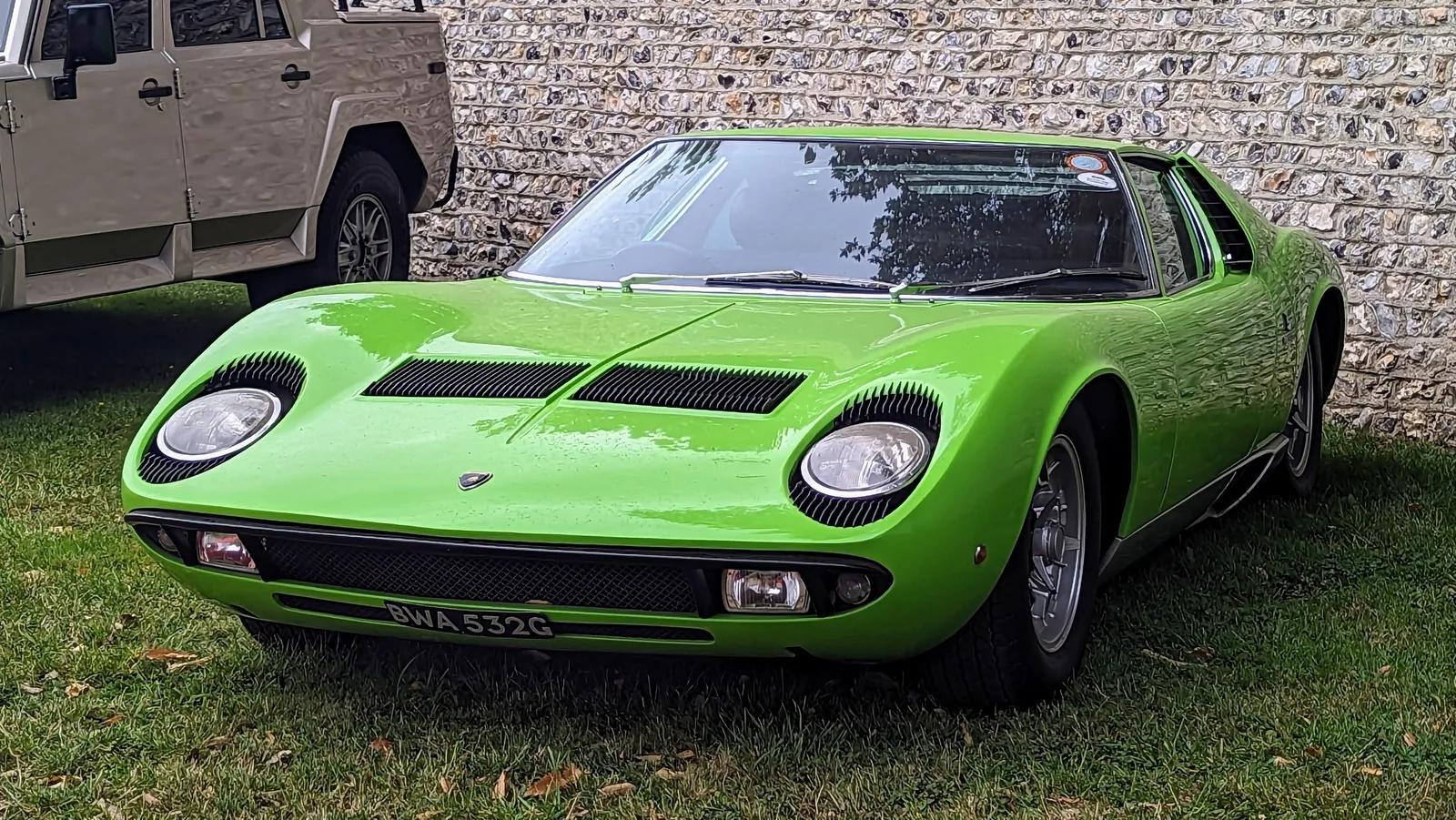
7. Lamborghini Miura (1966)
Built: 763 across P400, P400 S and P400 SV (275, 338 and 150 per Lamborghini's historical archive)
Why it matters: the car that defined the modern supercar. A transverse mid-mounted V12 in a road car body by Bertone shocked the 1966 Geneva show. Lamborghini expected to sell 50; it built more than 750.
8. Maserati Ghibli (1967)
Built: 1,170 coupés and 125 Spyders (Maserati figures)
Why it matters: a long, low, V8-powered grand tourer and one of the most beautiful shapes of the era. Rarer still is the Spyder, and rarer again the 4.9-liter SS versions.
9. Alfa Romeo 33 Stradale (1967)
Built: 18 chassis, of which only about a dozen were conventional road cars (others became prototypes and design-house concepts)
Why it matters: a Tipo 33 race car made road legal, with butterfly doors and a hand-built, curvaceous body. It is often called one of the most beautiful cars ever made, and it is rarer than the 250 GTO.
10. Ferrari 365 GTB/4 "Daytona" (1968)
Built: 1,284 berlinettas plus 122 factory spiders (1,406 total)
Why it matters: the last great front-engined V12 Ferrari of its era. Nicknamed after Ferrari's 1-2-3 finish at Daytona in 1967, it became one of the defining fast grand tourers of its era. Factory spiders are among the most valuable road Ferraris of the 1970s.
11. Dino 246 GT and GTS (1969)
Built: 2,487 GT coupés and 1,274 GTS targas (3,761 total)
Why it matters: a mid-engined V6 sports car sold under the Dino name. Small, light and beautifully balanced, it introduced a generation to mid-engined Ferraris, and prices for good examples reflect it.
The 1970s: Wedges, Rally Legends and Italian-American Muscle
12. De Tomaso Pantera (1971)
Built: about 7,260 (1971 to 1992)
Why it matters: Italian design, a mid-mounted Ford V8 and sold through Ford's U.S. dealer network. The Pantera brought exotic looks within reach of American buyers and remains one of the most usable Italian classics.
For sale now on RareCars.com: 2007 Lamborghini Gallardo, 2006 Ferrari 612 Scaglietti, 2015 Maserati GranTurismo
Italian sports cars for sale →13. Lancia Stratos HF Stradale (1973)
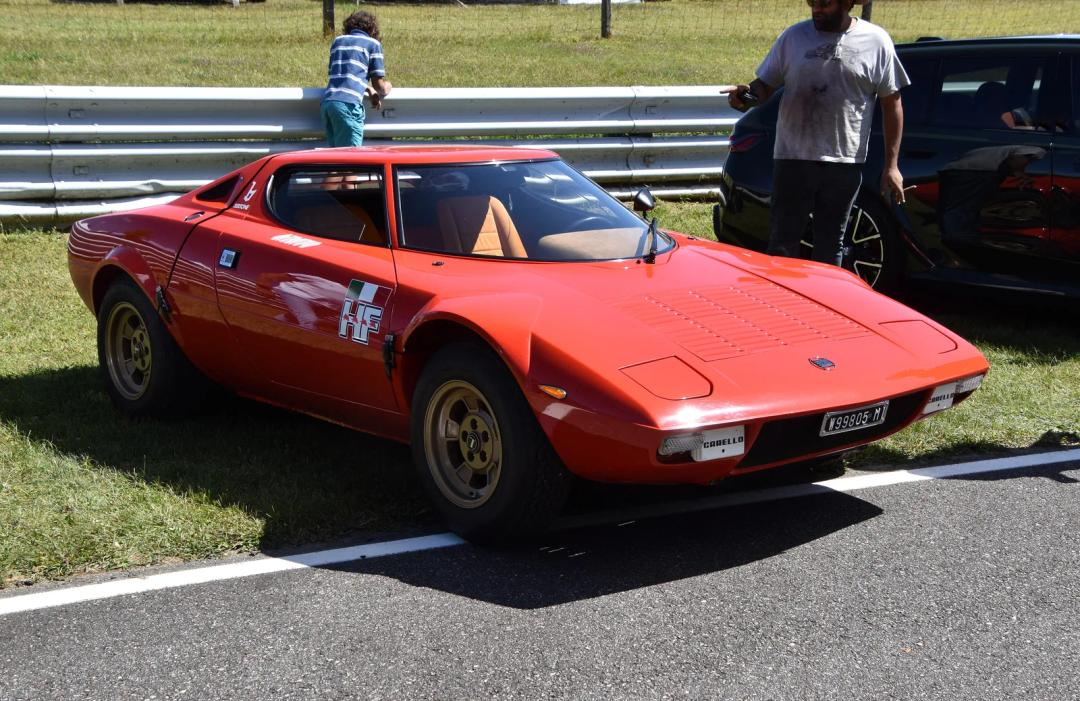
Built: about 492 (commonly cited; exact total is disputed)
Why it matters: the first car designed from scratch to win the World Rally Championship, and it did, taking three straight manufacturers' titles from 1974 to 1976. The road car existed to homologate the rally car, with a Ferrari-built Dino V6 behind the seats and a tiny Bertone wedge body.
14. Lamborghini Countach (1974)
Built: 1,983 (commonly cited; Lamborghini's anniversary history gives a slightly higher tally)
Why it matters: the original poster car. Scissor doors, a wedge shape that still looks futuristic, and 16 years in production. The final 25th Anniversary cars were the best-selling version, thanks to U.S. type approval.
The 1980s to 2000s: Group B and the Italian Supercar Era
15. Lancia 037 Stradale (1982)
Built: 207 road cars (Group B homologation required 200)
Why it matters: the last rear-wheel-drive car to win the World Rally Championship for manufacturers (1983). The road version is a supercharged, mid-engined homologation special and one of the most collectible Italian rally cars.
16. Ferrari 288 GTO (1984)
Built: 272
Why it matters: planned as a 200-car homologation special for a racing class that never happened, it sold out at its Geneva debut. Ferrari itself calls it the springboard for the limited-edition supercar market that followed.
17. Ferrari F40 (1987)
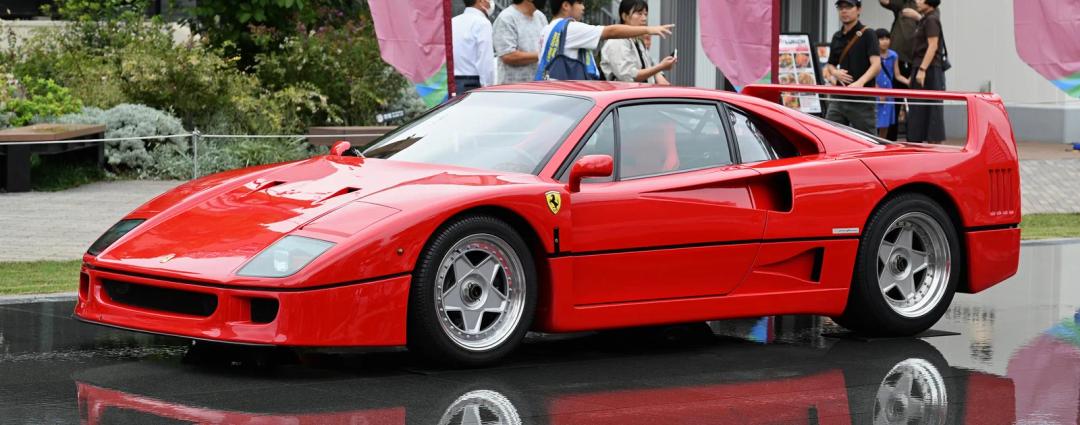
Built: 1,311 (Ferrari figure)
Why it matters: the last Ferrari launched under the founder, built to celebrate the company's 40th year. A twin-turbo V8, carbon and Kevlar body panels and no driver aids: raw, analog and still a benchmark for collectors.
18. Ferrari F50 (1995)
Built: 349
Why it matters: Ferrari announced it would build one fewer car than it thought it could sell. Its 4.7-liter V12 came directly from Ferrari's Formula 1 engine of 1990, mounted to a carbon-fiber monocoque.
19. Ferrari Enzo (2002)
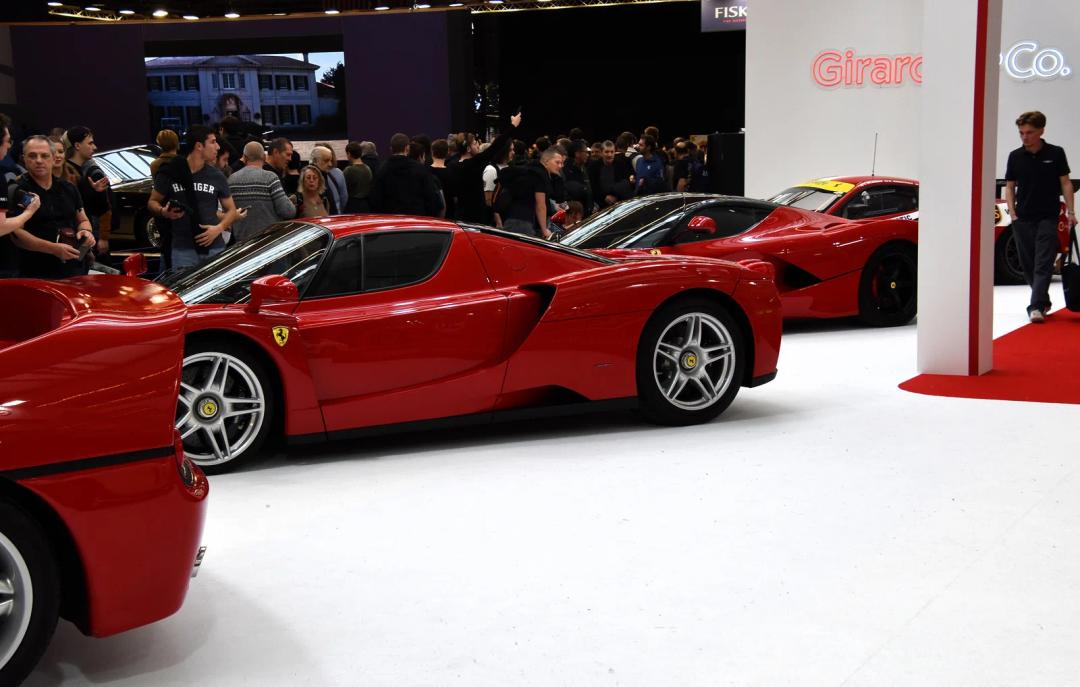
Built: 400 (399 for customers plus one built for charity)
Why it matters: Formula 1 technology at its most direct: a 660 hp V12, carbon-ceramic brakes and an F1-style paddle-shift gearbox. Named for the company's founder, it is the defining Italian hypercar of the 2000s.
20. Maserati MC12 (2004)
Built: 50 road cars (25 in 2004 and 25 in 2005), plus a small number of race cars
Why it matters: built to bring Maserati back to GT racing, which it did with championship wins. With just 50 road cars, it is one of the rarest modern Italian supercars. Read more in our Maserati MC12 story.
What Makes an Italian Car "Iconic"?
Looking across the list, the same ingredients keep appearing:
- Racing first. The 250 GTO, Giulia TZ, Stratos, 037 and MC12 were built to win. Road versions existed because the rules demanded them.
- Coachbuilt design. Pininfarina, Bertone, Zagato, Scaglietti and Touring gave Italian cars their shape and their reputation.
- Engines with character. From Lancia's V6 to Ferrari and Lamborghini V12s, the soundtrack is part of the story.
- Low production. Most of these cars were built in the hundreds, some in the dozens. Scarcity plus history is what keeps collector demand strong.
Buying a Classic Italian Car: Three Quick Tips
- Documentation is everything. Factory build records, certification from the maker's classic department where available, and continuous ownership history add confidence and value.
- Get a marque specialist's inspection. Italian classics reward expert eyes: matching numbers, correct parts and the quality of past restorations matter enormously.
- Budget for maintenance. Many of these cars need specialist servicing. Factor that in alongside the purchase price.
Find Italian Sports Cars for Sale on RareCars.com
RareCars.com is a marketplace built only for collectible, classic, exotic and rare cars, including Italian sports cars from Ferrari, Lamborghini, Maserati, Alfa Romeo and Lancia when they are listed. Use the filters to narrow down the make and era you love, and contact the seller directly.
Browse Italian sports cars and other rare cars for sale on RareCars.com →
FAQ
What is the most iconic Italian car?
Many collectors would say the Ferrari 250 GTO: only 36 were built, it won on track, and it holds the auction record for a Ferrari at $51.705 million (2023). For sheer cultural reach, the Fiat 500 is just as iconic.
What was the first supercar?
The Lamborghini Miura (1966) is widely credited as the first modern supercar, thanks to its mid-mounted V12 in a road car.
Which Italian race cars were sold as road cars?
Examples include the Ferrari 250 GTO, Alfa Romeo Giulia TZ, Alfa Romeo 33 Stradale, Lancia Stratos HF Stradale, Lancia 037 Stradale and Maserati MC12.
Ready to sell? Compare Private Sale, Dealer Sale and Fast Cash Offer.
Sell your car →