In this article
What to check first on any classic Mustang for saleFirst-generation Mustangs at a glanceWhat the VIN tells you on a 1965–1973 MustangWhat we found in 59 classic Mustangs for sale on RareCars.comThe San Jose-built MustangsReplicas, tributes and restomodsA pre-purchase checklist for a classic Mustang for saleClassic Mustangs for sale on RareCars.comFAQSources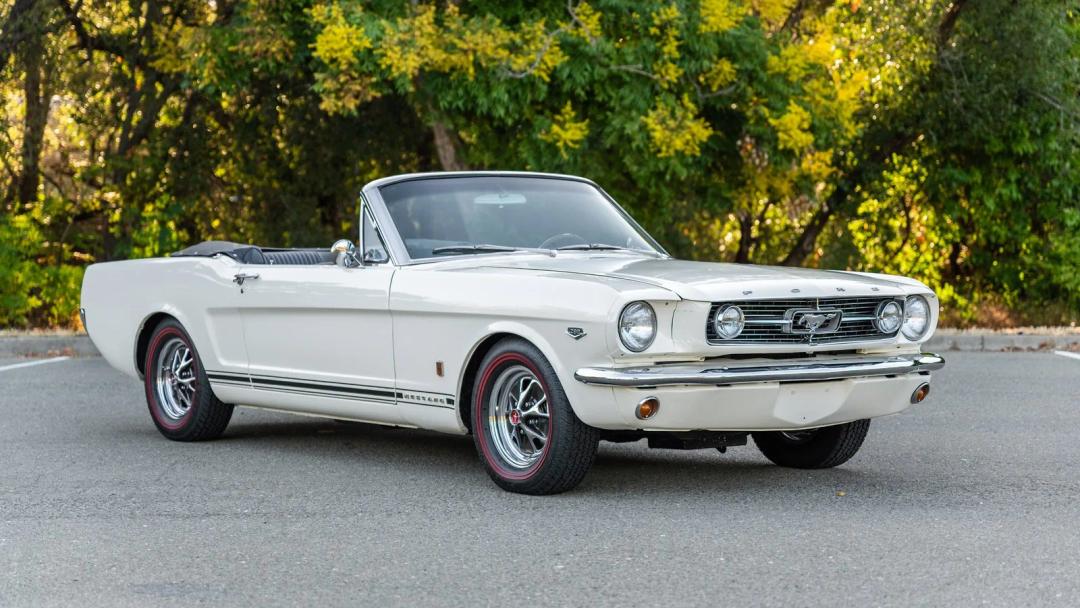
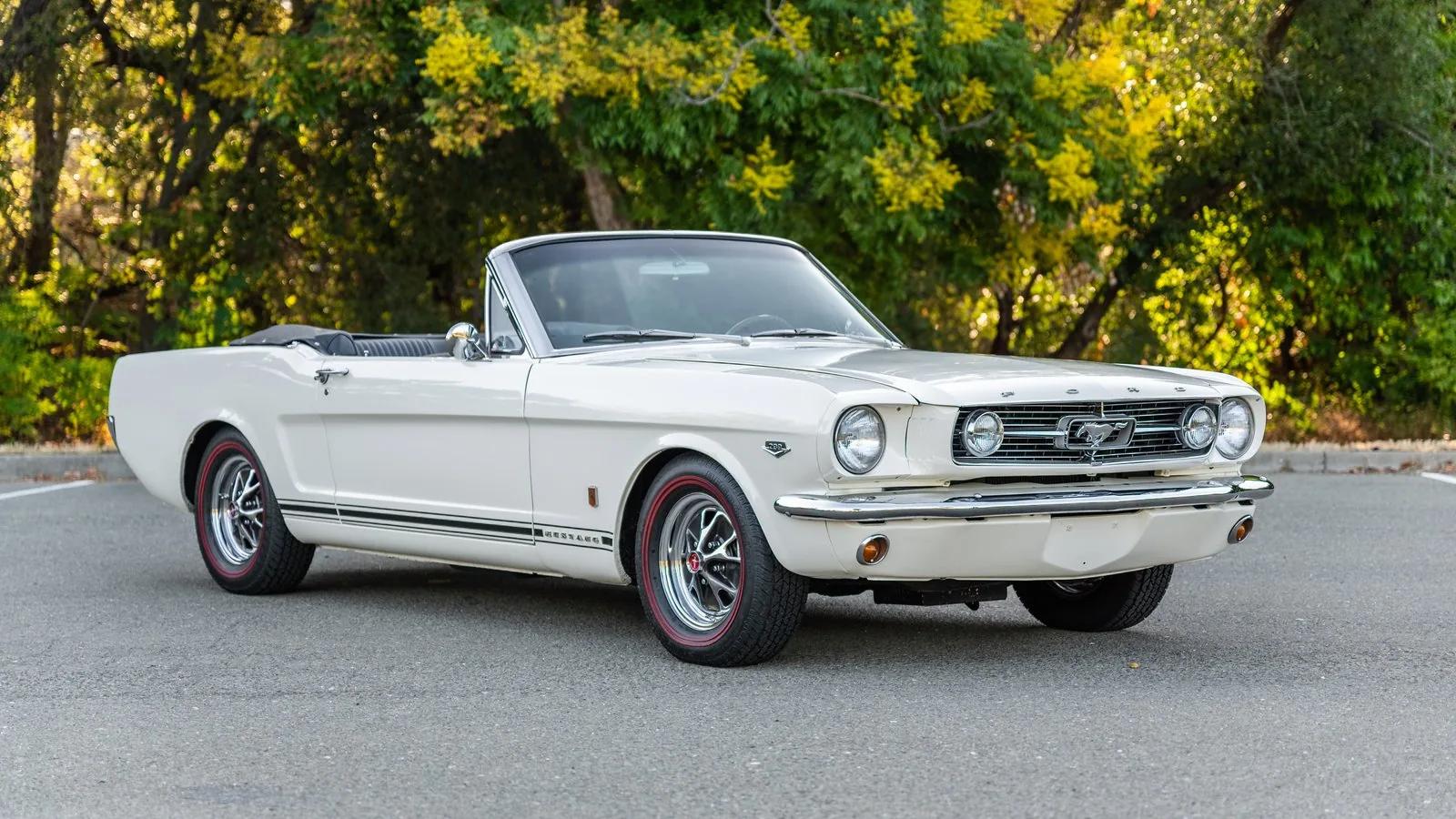
Search for a classic Mustang for sale and you'll mostly find first-generation cars: the 1965 to 1973 model years, including the early "1964½" cars that were titled as 1965s (source 1). Ford built almost 1.3 million Mustangs in the first two years alone (source 1), so there's plenty of choice. The hard part is knowing what a car started as, because six-cylinder coupes have become V8 cars, fastbacks have become movie replicas, and engines have been swapped for 60 years.
The good news is that a first-gen Mustang's VIN is short and readable. This guide shows you how to decode it, what each engine letter means, and what we found when we decoded every classic Mustang for sale on RareCars.com today. If you'd rather start with the cars, browse every Ford Mustang for sale on RareCars.com.
What to check first on any classic Mustang for sale
- The VIN's fifth character. It's the factory engine code. It tells you whether the car was born a six, a small-block V8 or a big-block.
- The body code. Characters three and four tell you hardtop, fastback or convertible as built.
- Rust in the structure. These are unibody cars, so the cowl, floors, torque boxes and frame rails matter more than shiny paint (sources 5 and 6).
- Paperwork for any performance claim. GT, Hi-Po, Mach 1, Boss and Cobra Jet cars carry a premium, and every one of them has been copied (source 6).
First-generation Mustangs at a glance
| Years | What changed | Key numbers |
|---|---|---|
| 1965 (incl. "1964½") | Launched April 1964 as a hardtop and convertible; fastback from August 1964. Early cars had the F-code 260 V8, replaced by the 289 in August 1964 | 559,451 built in 1965 (source 2); 15,079 with the GT Equipment Group (source 1) |
| 1966 | New grille and trim; round gauges became standard | 607,568 built (source 2); best-selling US convertible that year with 72,119 (source 1) |
| 1967–1968 | Restyle; the 390 big-block (S code) arrives; 428 Cobra Jet (R code) in 1968 | Engine codes in source 3 |
| 1969–1970 | Restyle; Mach 1 and Grande arrive; Boss 302 (G code) and 351s | 72,458 Mach 1s through 1969 (source 1); 7,013 Boss 302s for 1970 (source 4) |
| 1971–1973 | Largest first-gen body; big engines dropped after 1971, 351 tops out for 1972–73 | All 1973 cars from Dearborn (source 3) |
What the VIN tells you on a 1965–1973 Mustang
How to read it
Take a VIN like 7R02S116857. Read it left to right (source 3):
- 7: last digit of the model year (1967).
- R: the assembly plant. F = Dearborn, R = San Jose, T = Metuchen.
- 02: the body code. For 1965–66: 07 coupe (hardtop), 08 convertible, 09 fastback. For 1967 on: 01 coupe, 02 fastback, 03 convertible; the 1970 table adds 04 Grande and 05 Mach 1.
- S: the engine code (here a 390 four-barrel V8).
- 116857: the unit number.
Engine codes worth knowing
| Code | Engine as built | Years (per source 3 tables) |
|---|---|---|
| T | 200 six-cylinder, 1V | 1965–1970 |
| F | 260 V8 on early (1964½) cars; 302 V8 from 1968 | 1965 early / 1968–1973 |
| C | 289 2V V8, 200 hp | 1965–1968 |
| A | 289 4V V8, 225 hp | 1965–1967 |
| K | 289 4V High Performance, 271 hp | 1965–1967 |
| S | 390 4V V8 | 1967–1969 |
| R | 428 Cobra Jet (CJ-R in 1969–70) | 1968–1970 |
| G | Boss 302 | 1969–1970 |
| H / M | 351 V8s (M is the higher-output four-barrel) | 1969–1973 |
What the VIN can't tell you
The VIN tells you how the car left the factory, not what's in it now, and it doesn't confirm options like the GT package or factory air. For that, check the door data plate and ask for a factory build report from Ford-licensed production records, especially on 1967 and later cars (source 6). Part numbers and date stampings matter too: almost anything, even fastback sheet metal, can be added to a lesser car (source 5).
What we found in 59 classic Mustangs for sale on RareCars.com
On Oct 30, 2026, RareCars.com had more than 100 Ford Mustangs listed, and 59 of them are first-generation cars (1965–1973) from 14 dealers in 12 states. 58 show an asking price, from $19,995 to $449,900, and half ask less than about $56,000. Here's what decoding all 58 Ford VINs showed (the 59th is a Shelby with its own VIN format):
- The early years dominate. 13 are 1965s, 10 are 1966s, 13 are 1967s and 8 are 1968s. That's 44 of 59 from 1965–68.
- Nine were born with a six, and five of those now have a V8. 9 VINs carry the T code (200 six-cylinder). Only 4 still list a six. The other 5 now list a 289, a 302 or just "V8". None of them hides it in the VIN, so it takes 10 seconds to check.
- Zero K-code cars. Not one of the 58 Ford VINs carries the K code for the 271 hp 289 Hi-Po. If a 1965–67 car is sold as a Hi-Po, the VIN is the first thing to read.
- Big-block VINs are rare, and some of them have moved on. 9 VINs carry a performance code: 6 S (390), 2 R (428 Cobra Jet) and 1 G (Boss 302). Of those 9, 2 are now movie-car replicas, 1 is a modern-engine restomod and 1 has a later 428 in place of its 390.
- Fastbacks ask almost twice as much as convertibles. Comparing like with like (48 cars, no replicas, restomods or Shelby), the 20 fastbacks have a middle asking price of about $77,500, the 20 convertibles about $42,000 and the 8 hardtops about $40,000.
- Manuals ask more. The middle asking price is $94,900 for the 23 priced manual cars and $46,997 for the 35 automatics, partly because many performance cars have four-speeds.
- The priciest cars are mostly built cars. Of the 6 highest-priced first-gen Mustangs ($249,900 to $449,900), 5 are replicas or modern-engine restomods. The sixth is a 1967 Shelby GT350.
- There's a real entry point. 26 of the 58 priced cars ask under $50,000.
- One 1965 is an early "1964½" by its engine code. Its VIN carries the F code, and the F-code 260 V8 ended with the 1964 model year (source 1).
The San Jose-built Mustangs
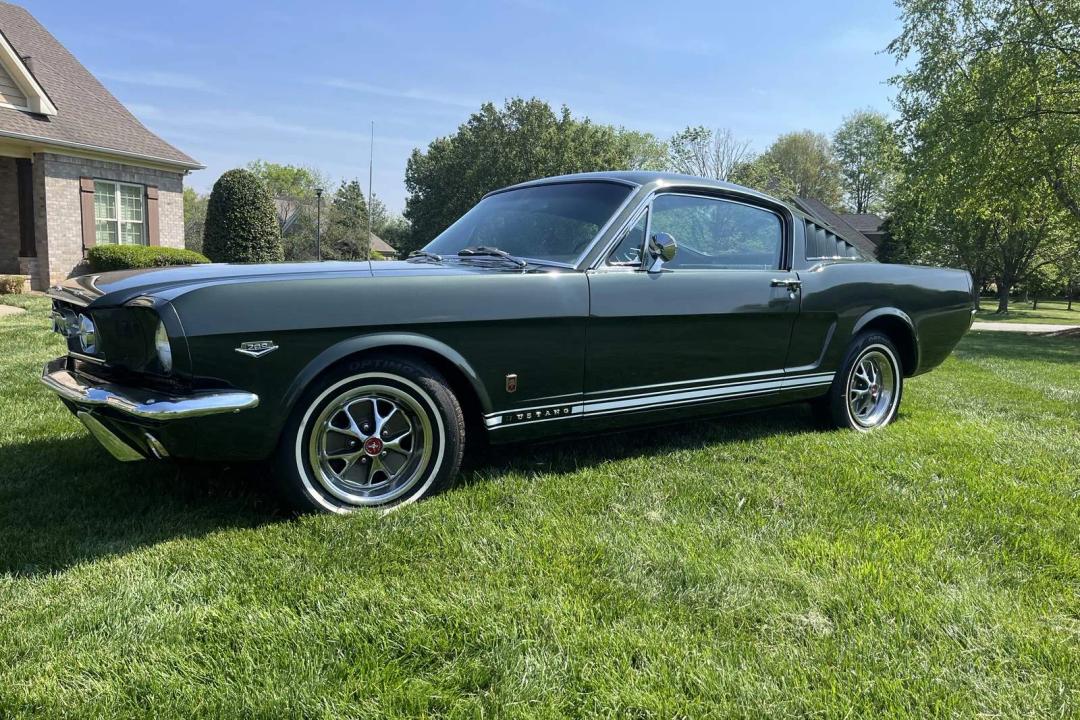
RareCars.com is based in Silicon Valley, and so is part of the Mustang's history. Ford built first-generation Mustangs at three US plants: Dearborn, Metuchen and San Jose (sources 1 and 7). The San Jose plant, in what is now Milpitas, ran from 1955 to 1983; the site later reopened as a shopping mall, and one of its access roads is named Mustang Drive (source 7).
Of the 58 Ford VINs on RareCars.com today, 37 carry an F (Dearborn), 11 an R (San Jose) and 10 a T (Metuchen). 9 of the 11 San Jose cars are now listed outside California, so a West Coast-built car can turn up anywhere. Look for the R in the second position. All 4 of our 1973 cars are Dearborn-built, which fits Ford's 1973 plant list (source 3).
Replicas, tributes and restomods
Most of the high-dollar classic Mustangs for sale today aren't stock, and that's fine when the listing says so. Of the 59, 7 are listed as replicas or tributes (movie-car fastbacks, a Hertz GT350-style car and a Mach 1 tribute), with a middle asking price of about $175,000, and 3 are restomods with modern Coyote V8s, asking $249,900 to $399,900. RareCars.com has separate pages for Bullitt replicas and Eleanor replicas.
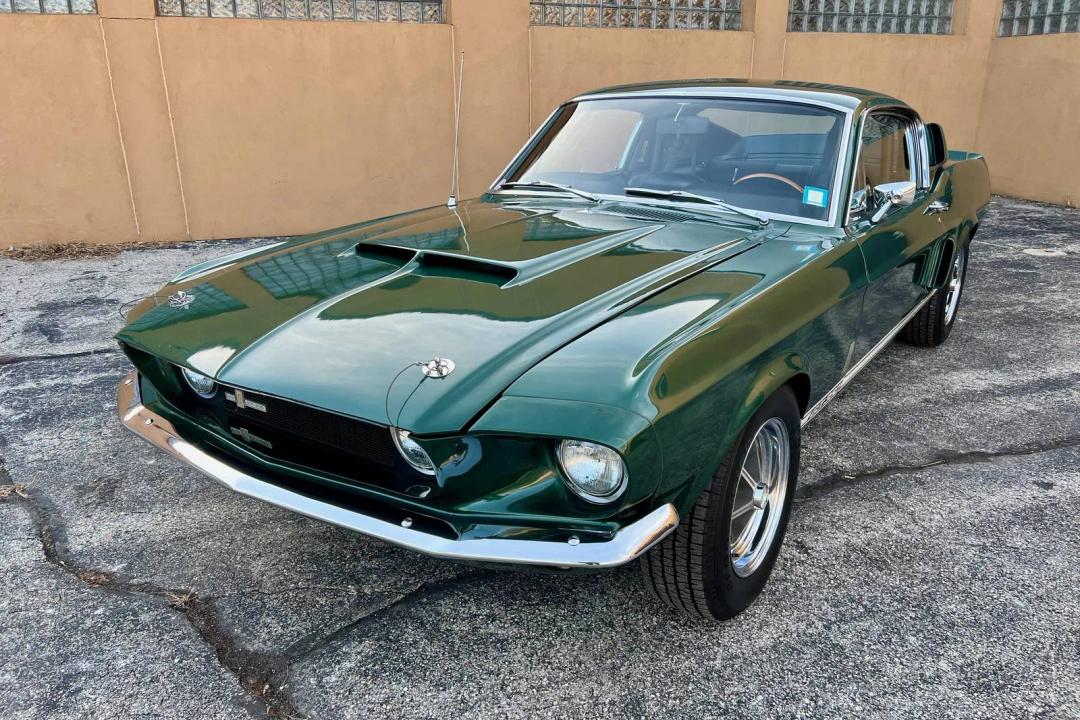
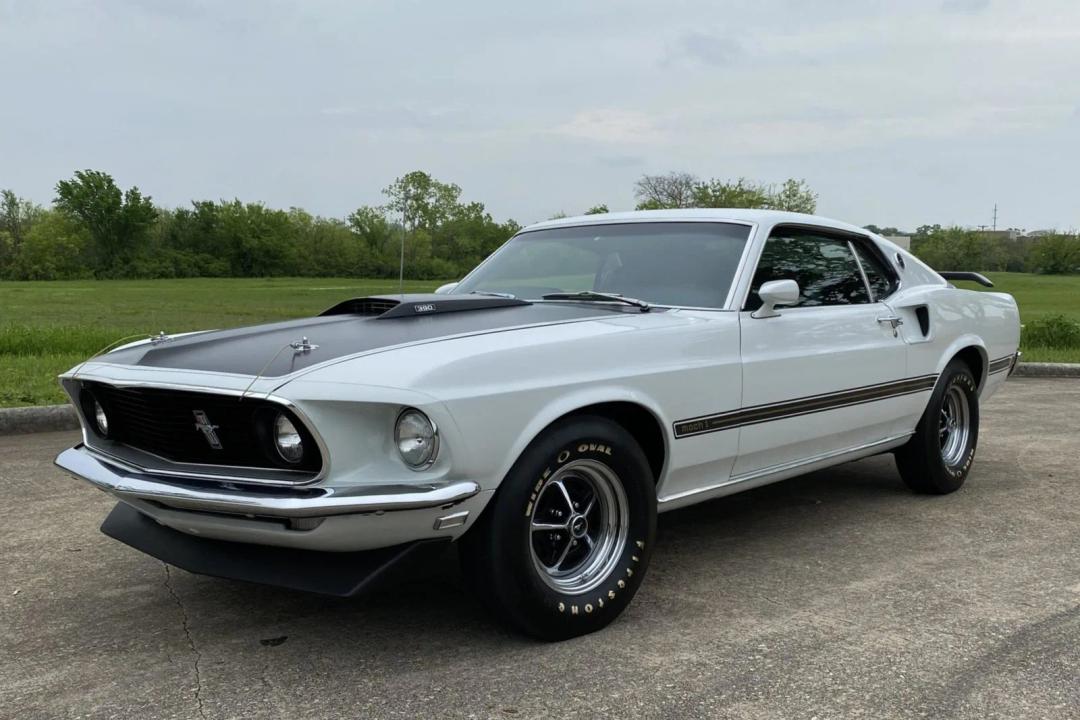
Judge a replica or restomod on the quality of the build and the receipts, not on originality. Judge an original-style car on its VIN, data plate and paperwork. The trouble starts only when one is sold as the other.
A pre-purchase checklist for a classic Mustang for sale
- Read the VIN and decode the year, plant, body and engine code (source 3).
- Check that the body code matches the car. A 1967–68 "02" should be a fastback, a 1965–66 "09" too.
- Compare the engine code with the engine in the listing. If they differ, ask when and why it changed.
- For a GT, Hi-Po, Mach 1, Boss or Cobra Jet, ask for the door data plate and a factory build report before you pay a premium (source 6).
- Check the cowl below the windshield and the front footwells for water (sources 5 and 6).
- Check the floors, torque boxes and front and rear frame rails from underneath (sources 5 and 6).
- Look at the shock towers for cracks or repair welds, especially on big-block cars (source 6).
- Check the lower doors, quarters, trunk floor and the area under the battery (source 5).
- Price in rubber, hoses, bushings and tires; most of it is available new (source 5).
- Get an independent inspection by a Mustang specialist before you buy.
Classic Mustangs for sale on RareCars.com
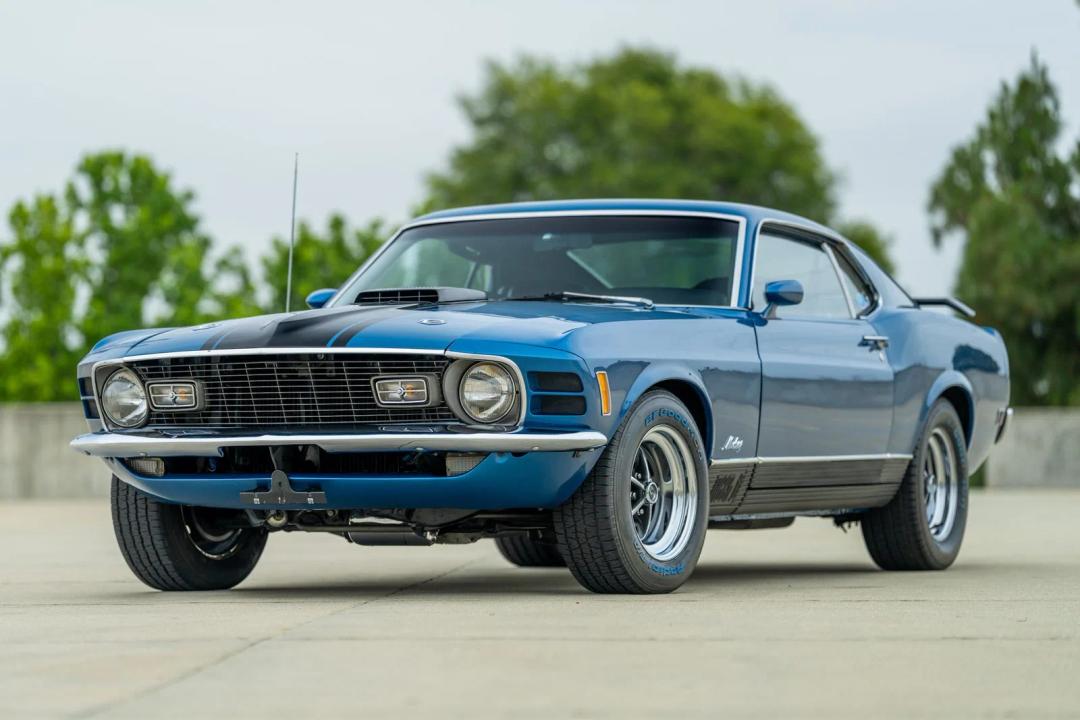
As of Oct 30, 2026, RareCars.com has 59 first-generation Mustangs listed by dealers across the US, from a six-cylinder fastback to a Boss 302, Cobra Jet cars, a Shelby GT350 and movie-car replicas. Live asking prices on the 58 priced cars run from $19,995 to $449,900. Every listing is reviewed and approved, and you contact the listing dealer through RareCars.com to check availability. Cars sell, so if a car linked here is gone, see the Mustangs for sale now.
More to explore:
- All Ford Mustangs for sale
- Mustang Bullitt replicas and Eleanor replicas
- Shelby cars for sale
- Ford Falcons for sale, the car the Mustang was built on
- Ford Thunderbirds for sale
- All Fords on RareCars.com
- Chevelle for sale: buyer's guide and Pontiac GTO for sale: buyer's guide
- Rare American cars of the 1960s
- Classic cars for sale in Silicon Valley and classic car dealers near you
- Selling a Mustang? List it on RareCars.com, or read where to sell a classic car online
FAQ
What years count as a classic Mustang?
Most buyers mean the first generation, 1965 to 1973, including the early cars built from March 1964 that were titled as 1965s and are often called "1964½" (source 1).
How do I tell if a Mustang was born a V8?
Read the fifth character of the VIN. On 1965–1970 cars a T means the 200 six. C, A, K, S, R, G, F (in 1968 on), H and M are V8 codes (source 3).
How do I know if a 1965–67 Mustang is a real Hi-Po?
A factory 271 hp 289 Hi-Po car has a K in the fifth position of the VIN (source 3). On RareCars.com today, none of the 58 first-gen Ford VINs carries a K.
Where were classic Mustangs built?
At three US plants: Dearborn (F), San Jose (R) and Metuchen (T) (sources 3 and 7). The plant letter is the second character of the VIN.
How much is a classic Mustang for sale today?
On Oct 30, 2026, the 58 priced first-gen Mustangs on RareCars.com asked from $19,995 to $449,900, and half asked less than about $56,000. Comparing standard cars, fastbacks asked about $77,500 in the middle, convertibles about $42,000 and hardtops about $40,000. These are asking prices, not sale prices.
Is a six-cylinder Mustang with a V8 swap worth less?
It depends on what you want. For a driver it may not matter. For an original-style car, a factory V8 code in the VIN matters more. Of the 9 six-cylinder-born cars on RareCars.com today, 5 now have a V8.
What's the most common rust problem on a classic Mustang?
The cowl under the windshield is the famous one, because a leaking cowl wets the floors. Check the floors, torque boxes, frame rails and shock towers too (sources 5 and 6).
Sources
- Wikipedia, "Ford Mustang (first generation)" (introduced April 17, 1964; production began March 9, 1964; 1964½ cars carried 1965 VINs; F-code 260 ended with the 1964 model year, T/C/A/K from August 1964; 15,079 GTs in 1965; 72,119 convertibles in 1966; 72,458 Mach 1s through 1969; almost 1.3 million Mustangs in the first two years at Milpitas, Dearborn and Metuchen; big engines dropped after 1971), read Oct 30, 2026: https://en.wikipedia.org/wiki/Ford_Mustang_(first_generation)
- Wikipedia, same article, "Production numbers" table (1965: 559,451; 1966: 607,568; the article flags that the years may be calendar years), citing Maine Mustang, read Oct 30, 2026: https://en.wikipedia.org/wiki/Ford_Mustang_(first_generation)#Production_numbers
- Maine Mustang, Mustang technical data pages for 1965, 1966, 1967, 1968, 1969, 1970 and 1973 (VIN layout; plant codes F Dearborn, R San Jose, T Metuchen; body codes; engine codes by year; 1973 Dearborn only), read Oct 30, 2026: https://mainemustang.com/mustang-info/1967-mustang-technical-data (and the matching pages for the other years, e.g. https://mainemustang.com/mustang-info/1970-mustang-technical-data)
- Wikipedia, "Boss 302 Mustang" (7,013 sold for 1970), read Oct 30, 2026: https://en.wikipedia.org/wiki/Boss_302_Mustang
- Hagerty, "Your handy 1965–66 Ford Mustang buyer's guide" (unibody rust areas: floors, frame rails, lower doors, trunk lid, cowl vent, rear window, under the battery, shock towers; fiberglass or filler repairs; rubber parts and tires; options and even fastback sheet metal can be added; ask for paperwork), read Oct 30, 2026 via web search (the page blocks direct fetches): https://www.hagerty.com/media/buying-and-selling/1965-66-ford-mustang-buyers-guide/
- MustangSpecs, "What to Look for When Buying a Classic Mustang: 15 Mustang Checks" (cowl, floors, frame rails, torque boxes, shock towers, quarters, trunk; verify the VIN against paperwork; research factory spec before paying for rarity), read Oct 30, 2026: https://www.mustangspecs.com/where-do-classic-mustangs-rust-15-areas-to-inspect-before-buying-a-classic-mustang/
- Wikipedia, "San Jose Assembly" (Ford plant in what is now Milpitas, 1955–1983; one of three Mustang plants; reopened as a mall in 1994 with access roads including Mustang Drive), read Oct 30, 2026: https://en.wikipedia.org/wiki/San_Jose_Assembly_Plant
- RareCars.com listing pages for all 110 Ford Mustang listing URLs in /sitemap.xml, of which 59 are 1965–1973 cars (JSON-LD price, VIN, body, transmission and images plus the description), read Oct 30, 2026, ~9:10 AM PT. Data: `evidence/post7-2026-10-30/listings-2026-10-30.csv`.
- Google Keyword Planner Historical Metrics export 2026-10-28 (US; Oct 1, 2025 – Sep 30, 2026): "classic mustang for sale" = 1K–10K avg monthly searches, Competition High. File: `seo/keyword-plan-top30-2026-10-28-gkp.md`.
---
Ready to sell? Compare Private Sale, Dealer Sale and Fast Cash Offer.
Sell your car →